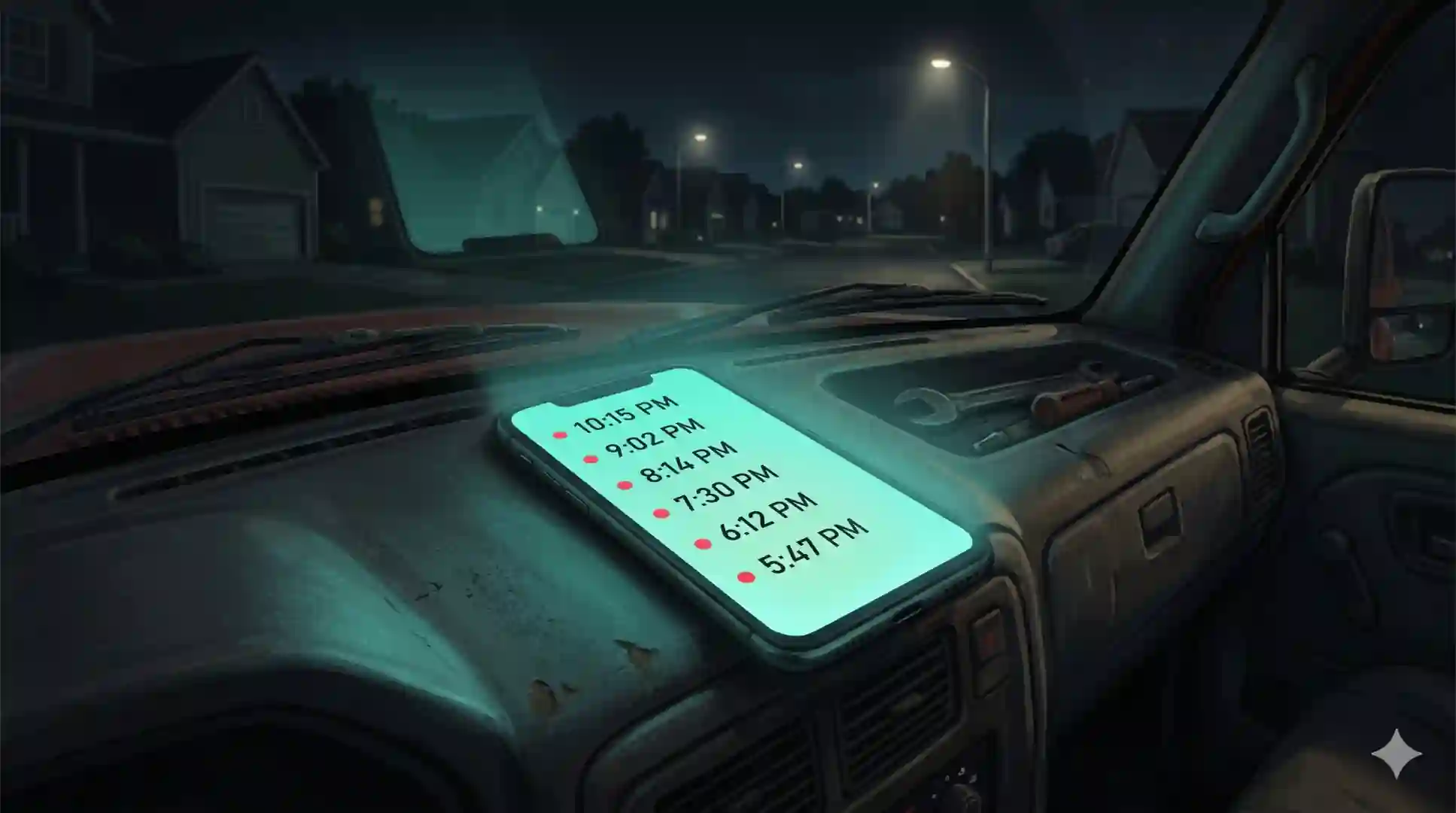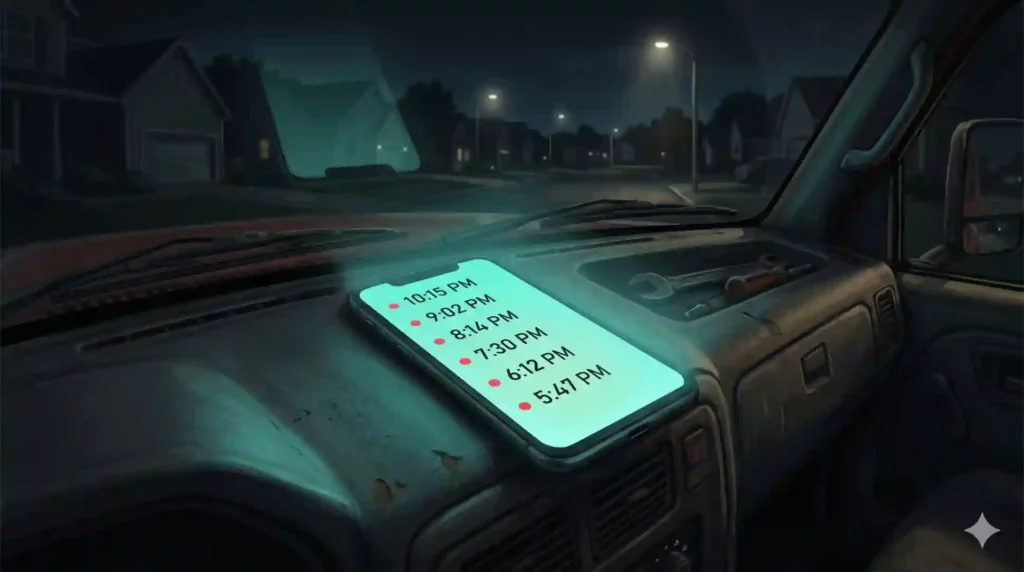
It’s 8:14 PM on a Tuesday in July. A homeowner’s AC unit just died. It’s 97 degrees. They have a two-year-old.
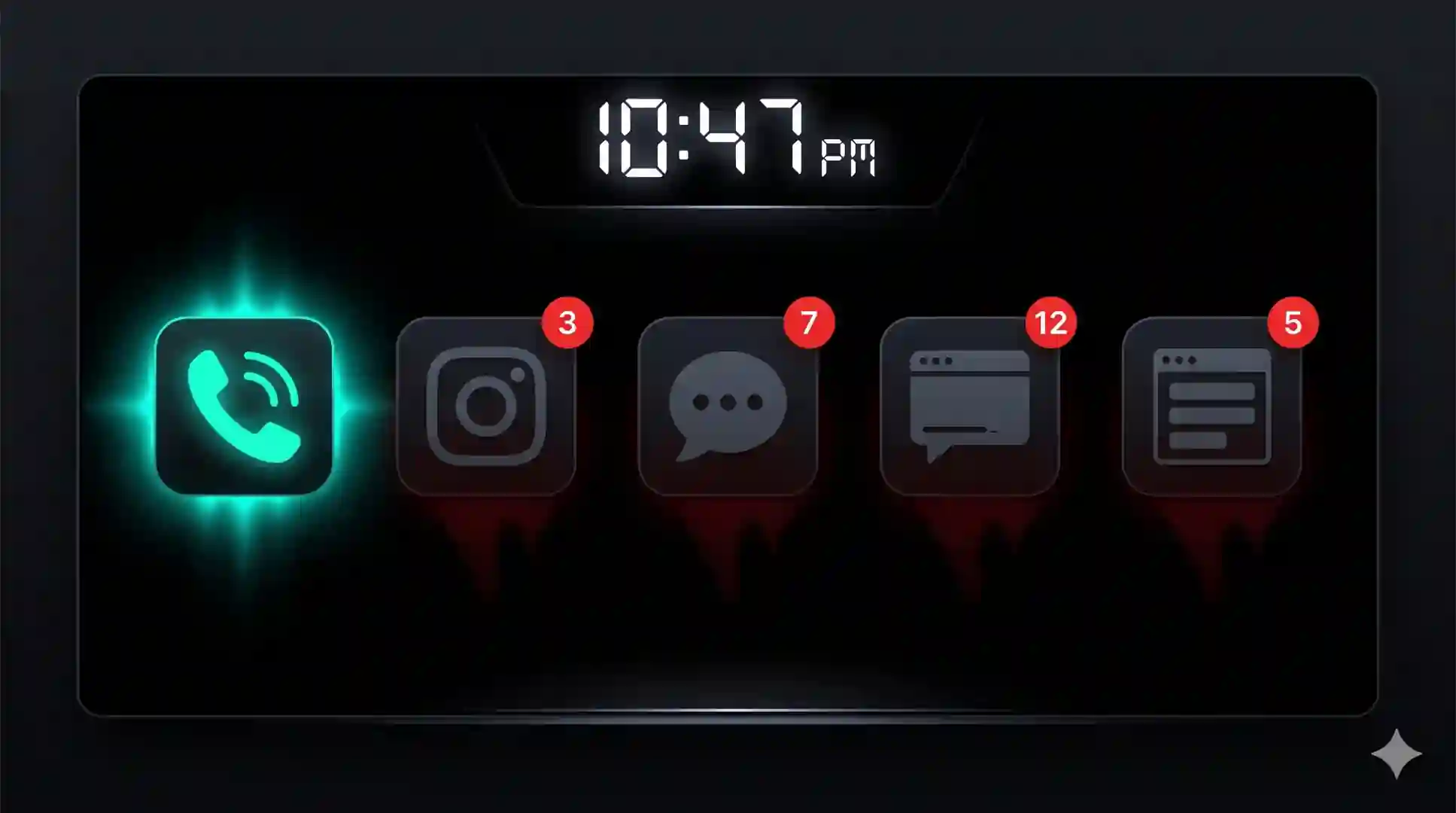
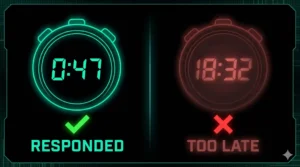
They grab their phone, search “HVAC emergency near me,” and call the first company with good reviews. The phone rings four times. Voicemail.
They don’t leave a message. They call the next one.
That call was worth $3,000 to $8,000 to your company. You’ll never know it happened because your phone system doesn’t track the calls that didn’t connect.
## The numbers that don’t show up in your reports
85% of callers who reach voicemail never call back. Not “many.” Not “some.” Eighty-five percent.
62% of unanswered callers immediately call a competing contractor.
These aren’t theoretical numbers. They’re pulled from call-tracking studies across thousands of service businesses. And they create a math problem that compounds every single day your phone goes unanswered.
Here’s what it looks like for a typical HVAC company:
**Scenario: a mid-size HVAC company, 5 trucks, $2.5M annual revenue.**
Average inbound calls per week: 85. Missed during busy periods, after hours, and weekends: roughly 25% — call it 21 missed calls per week.
Of those 21 missed calls, not all are new jobs. About 60% are service inquiries or new customers (the rest are existing customers checking on scheduled work, vendors, spam). That’s roughly 13 potential jobs missed per week.
At an average service ticket of $500 and a close rate of 25% on missed callbacks (because you lost the urgency window): that’s about 3 lost jobs per week. **$1,500 per week. $6,000 per month. $72,000 per year.**
And that’s the conservative number using $500 service calls. During peak season, when emergency calls spike and average tickets run $3,000–$8,000 for system replacements, a single missed call can cost more than a full month of any AI system you’d install to answer it.
## Why peak season is where the real damage happens
The cruelest part of the missed-call problem in home services is that it’s worst when your business is busiest.
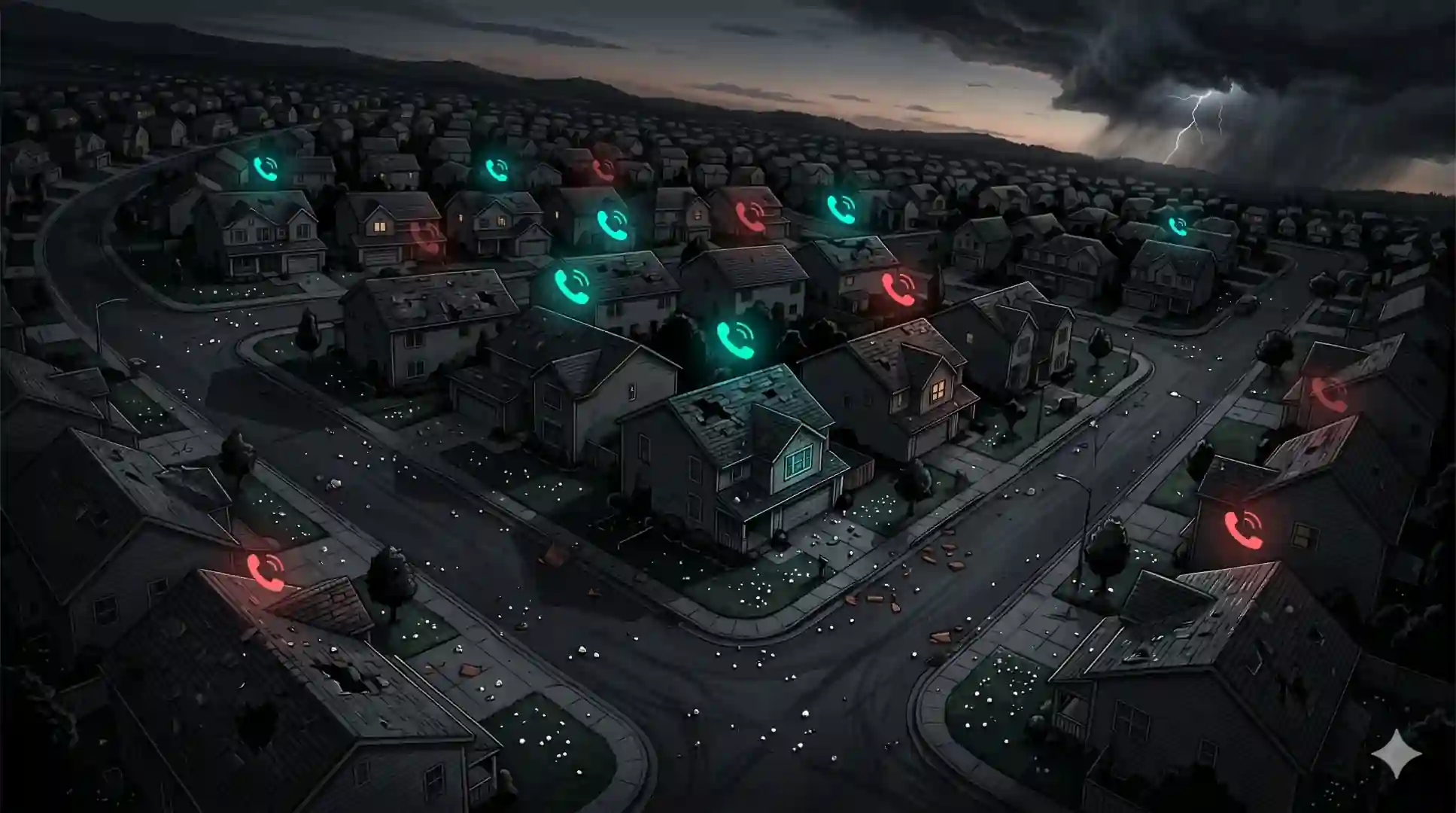
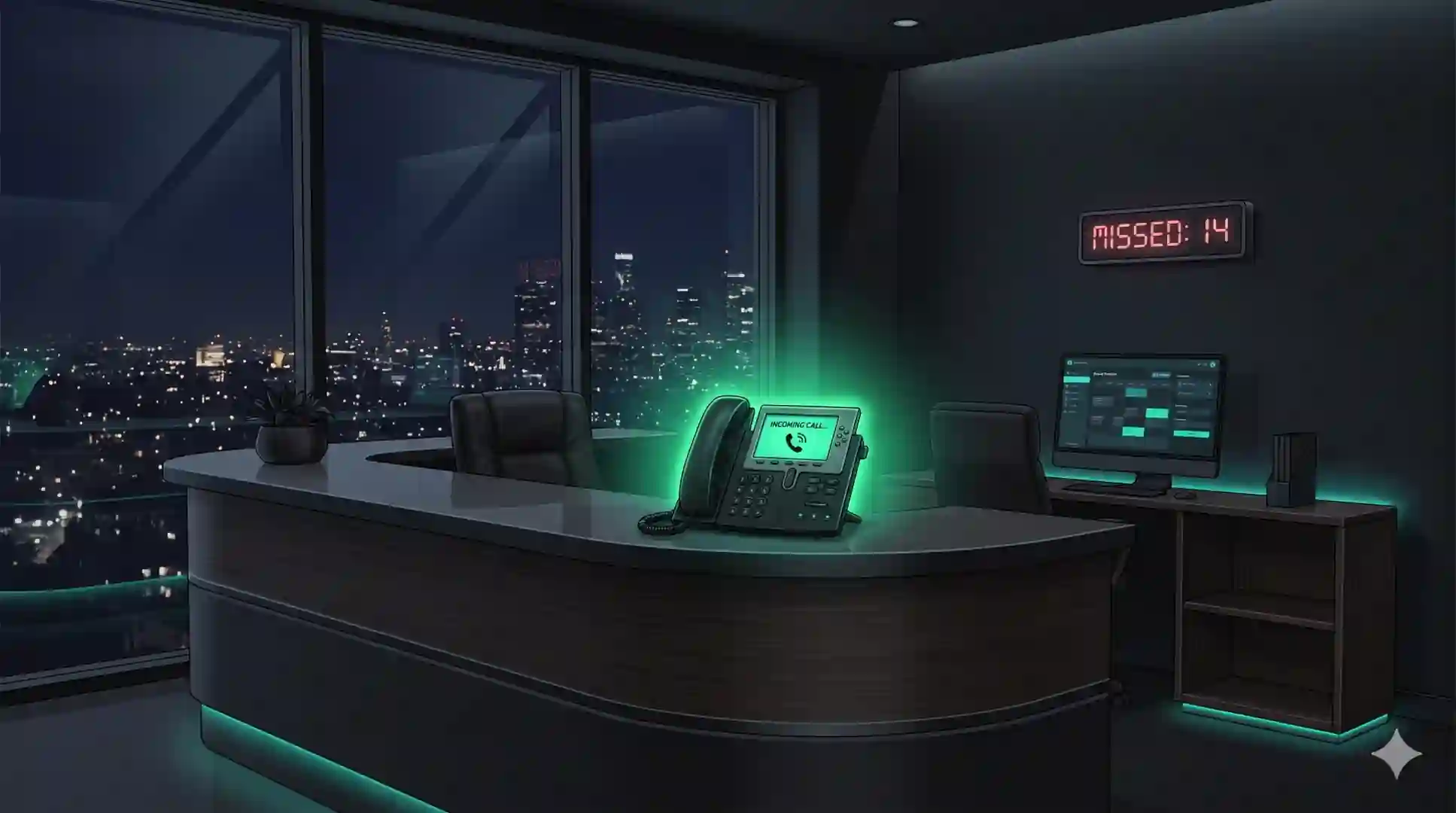
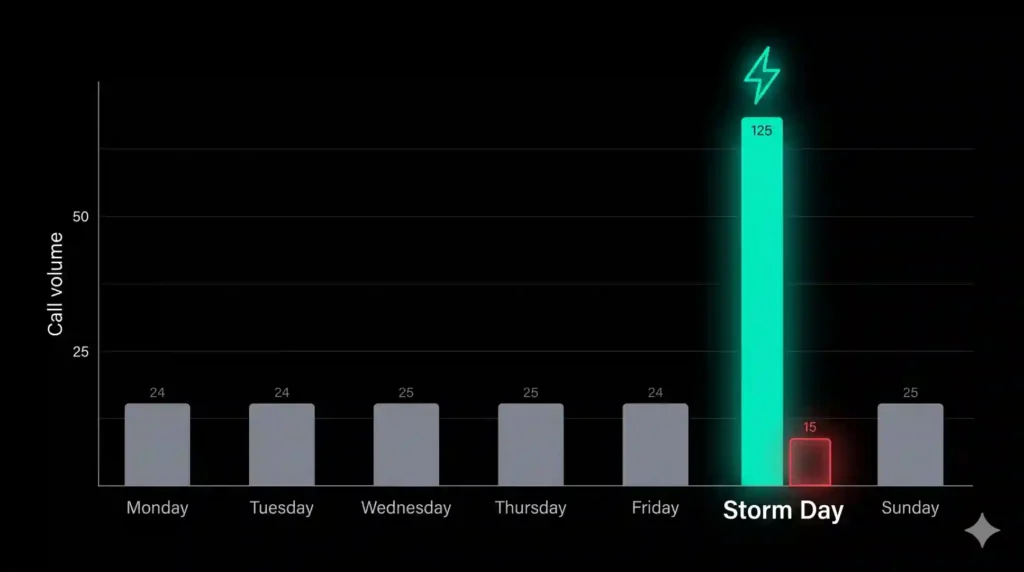
Storm day. Every tech is on a job. The office coordinator is dispatching, juggling callbacks, and handling the customers who are physically standing in the lobby. The phone rings. And rings. And rings.
During a Texas heat wave or a Midwest cold snap, inbound call volume can spike 8–15× above normal. You might get 200 calls in a day when your normal volume is 25. There is no staffing model that covers that kind of spike with human beings.
So the calls that come in during the spike — the ones from homeowners who are desperate, willing to pay premium, and ready to book immediately — go to voicemail. And from voicemail, they go to your competitor.
This is the math that kills: **the highest-value calls arrive at the exact moment you’re least able to answer them.**
## What a second hire doesn’t solve
The obvious fix sounds like “hire another person to answer the phone.” Here’s why that doesn’t work:
A full-time receptionist or dispatcher costs $35,000–$50,000 per year. They work 8-hour shifts. They take lunch. They take PTO. They call in sick on the Monday after the Super Bowl — which, statistically, is one of the highest-call-volume days in HVAC because everyone ran their systems hard over the weekend.
More importantly, a single human can answer one call at a time. When the storm hits and 15 calls arrive in 10 minutes, one person answers one of them. The other 14 hear a busy signal or a hold queue, and most hang up after 30 seconds.
Hiring doesn’t solve the structural problem. It puts a slightly larger bucket under a waterfall.
## What actually catches the calls
The system that works has three requirements: it answers every call (not 90% — every call), it answers immediately (not after 4 rings), and it handles the conversation well enough to book the job or route the emergency.
An AI receptionist built for home services does exactly this:
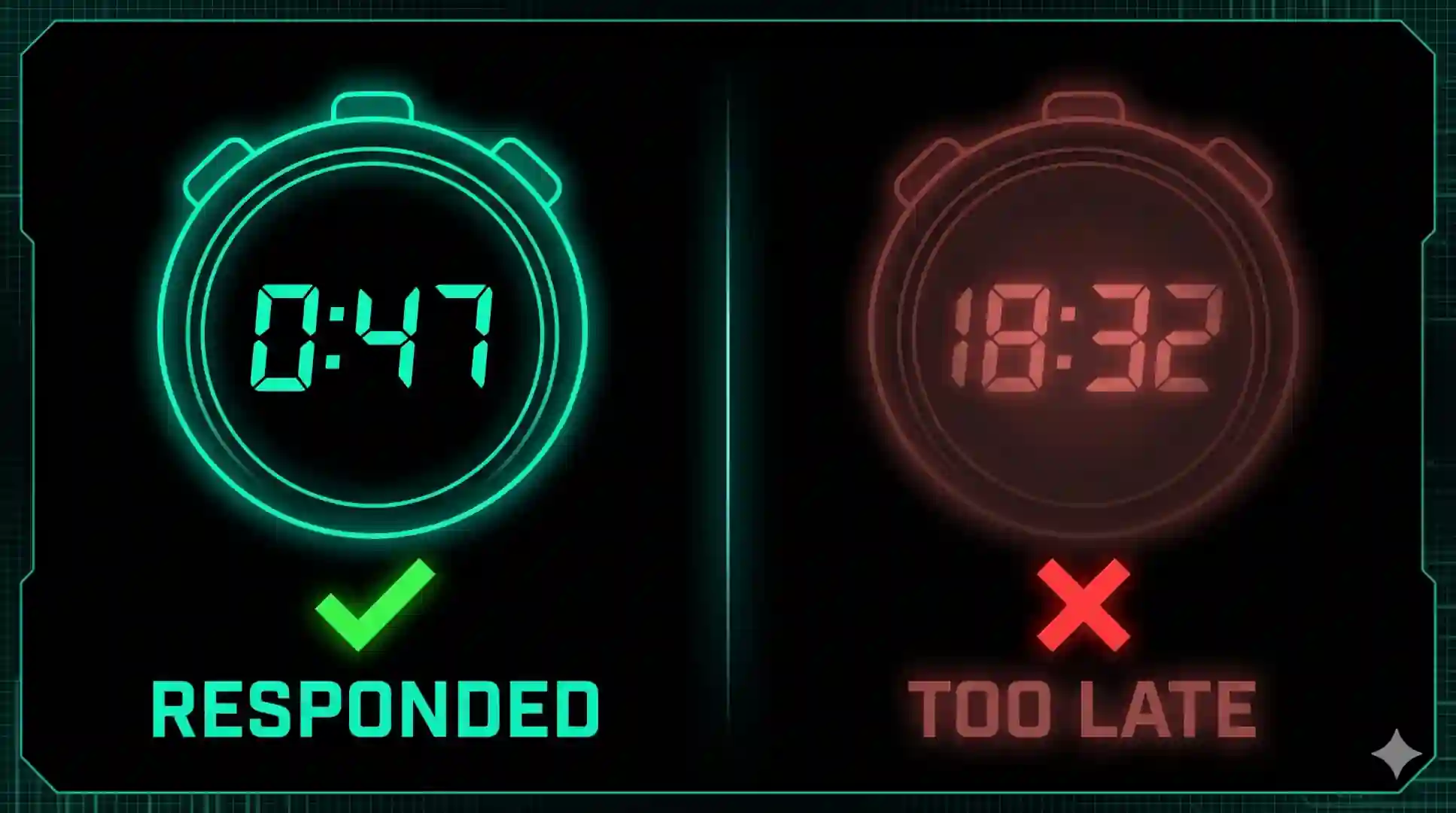
**Answers in under 2 rings, 24/7.** Tuesday at 8 PM, Saturday at 6 AM, Christmas morning when the pipes freeze. No voicemail. No hold music. No “press 1 for service.”
**Qualifies the call in real time.** “Is this an emergency or can it wait until tomorrow?” / “What type of system — heating, cooling, or plumbing?” / “What’s the address?” / “When’s the soonest you’d need someone out?” The AI captures what your dispatcher would capture — name, address, problem, urgency — and routes accordingly.
**Books the appointment or escalates the emergency.** Non-urgent calls get booked into the next available slot. True emergencies (active leak, no heat with elderly occupant, gas smell) get flagged and escalated to the on-call tech’s mobile immediately.
**Handles the storm spike.** This is the critical difference. An AI answers unlimited simultaneous calls. When 15 calls come in during a 10-minute window, all 15 get answered. Not one. Not three. All of them. Each caller gets the same quality intake experience whether they’re the first call of the day or the 200th.
## The payback math
Here’s the math on a napkin — the way contractors actually think about it:
An AI system for a home services company runs $797 to $1,485 per month depending on the scope. At $1,485/month (the full system), your annual cost is $17,820.
Your average system replacement is $5,000. One captured emergency call — one call that would have gone to voicemail on a Saturday night — pays for more than three months of the system.
At an average service ticket of $500, you need to capture 3 extra jobs per month to break even. Most companies are missing 13+ potential jobs per week.
The system doesn’t need to be perfect. It just needs to catch the calls your team physically can’t.
## One thing to check this week
Ask your answering service or phone system provider for last month’s call log. Count the calls that went to voicemail, hit a busy signal, or rang more than 5 times. If you don’t track this, that’s the first problem — you’re leaking revenue and you can’t see the hole.
If you want us to run this analysis with your actual call data, book a free 30-minute growth session. We’ll map your call patterns, identify the peak-leak windows, and calculate what those missed calls are costing you — no obligation.
Book Your Free AI Growth Session →
—
*Neuzenix installs AI systems inside HVAC, plumbing, and electrical companies that answer every call — including the 8 PM emergency, the storm-day spike, and the Saturday morning when your office is closed.