A person gets rear-ended at 5:22 PM on a Wednesday. They’re shaken up, their back hurts, and the other driver’s insurance company is already calling. They pull out their phone in the ER waiting room and search “personal injury attorney near me.”
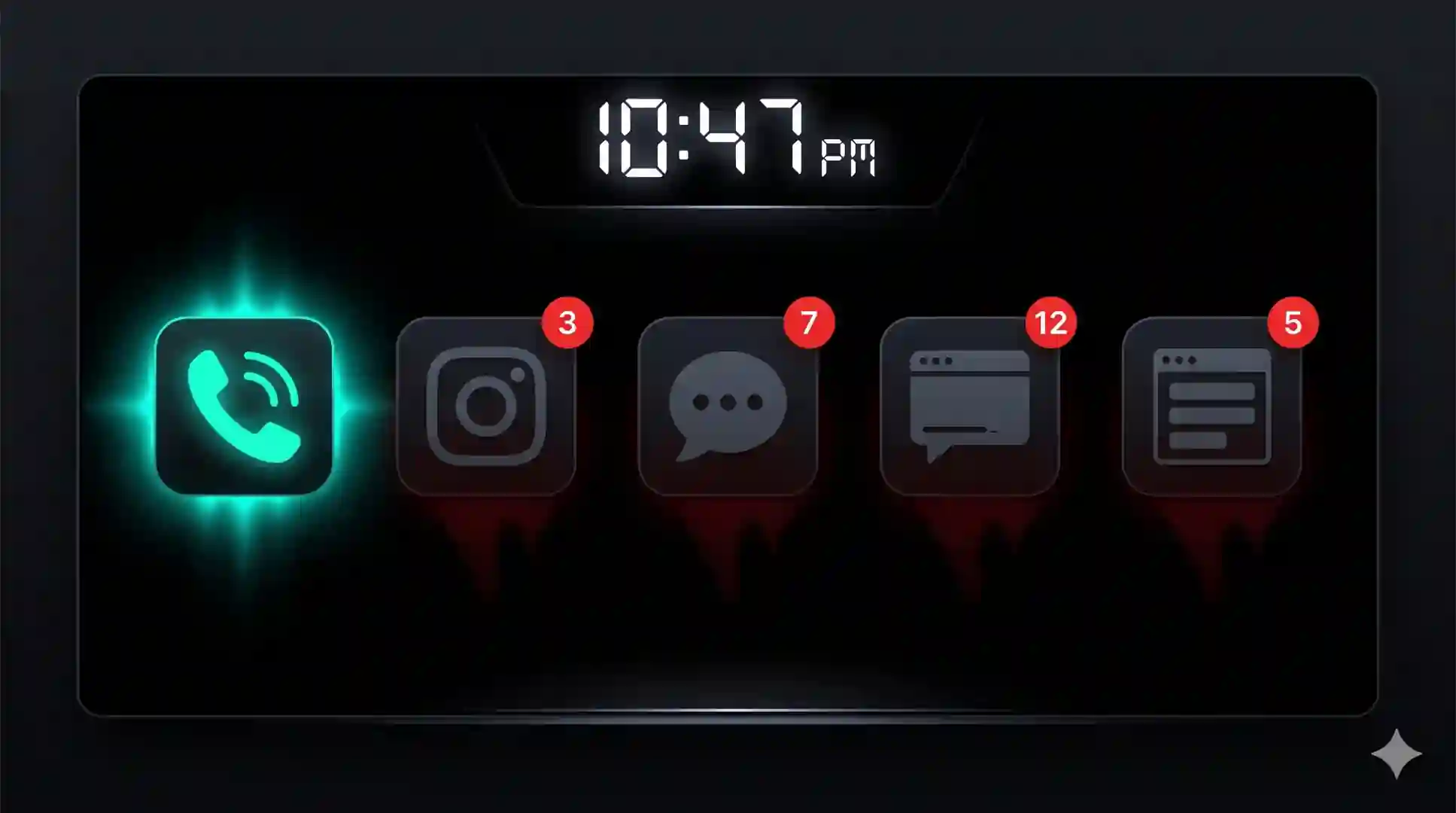
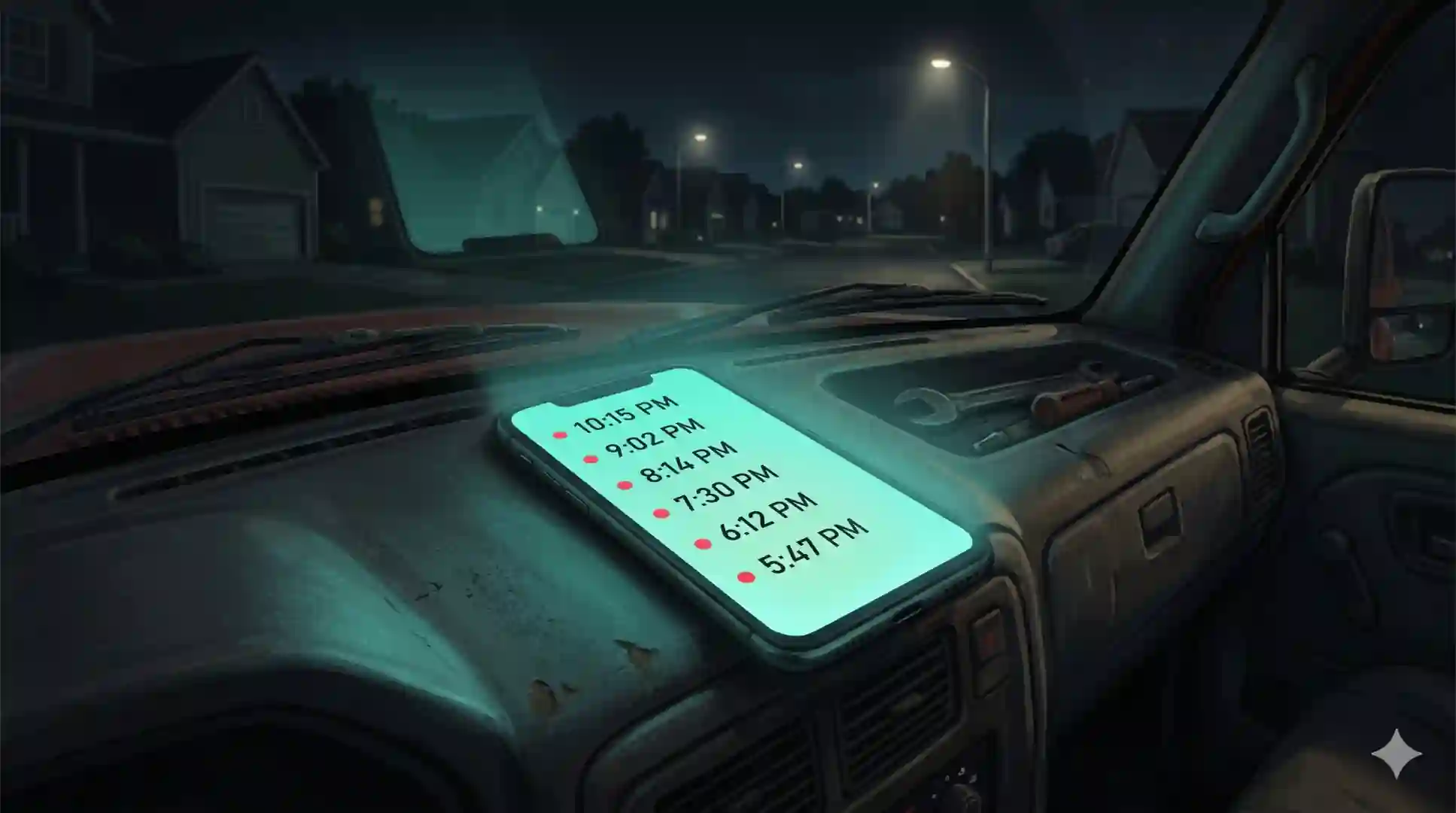
They call your firm at 5:47 PM. Your intake coordinator left at 5:30. Voicemail.
They don’t leave a message. They call the next firm on the list. That firm picks up. That firm gets the case.
You spent $250 on the PPC click that drove that search. The case, once signed, would have been worth $25,000 to $40,000 in fees. You’ll never know it existed because your call log just shows “missed call, 5:47 PM, no voicemail.”
## The 42% problem
Legal intake data consistently shows that 42% of potential client calls arrive outside standard business hours — evenings, weekends, and holidays. For PI firms specifically, the concentration is even higher because accidents don’t happen on a schedule.
Car accidents, slip-and-falls, workplace injuries — these happen at 5:47 PM, at 9 PM, on Saturday mornings, on holiday weekends. The victim’s first instinct is to call a lawyer. Their second instinct, if the first lawyer doesn’t answer, is to call the next one.
This creates a structural math problem that no staffing model can solve:
Your intake coordinator works 8:30 AM to 5:30 PM, Monday through Friday. That’s 45 hours per week of coverage out of 168 hours in a week. You’re uncovered for **73% of the week** — and that 73% is when some of your highest-value cases are calling.
## What the 400% rule means for your firm
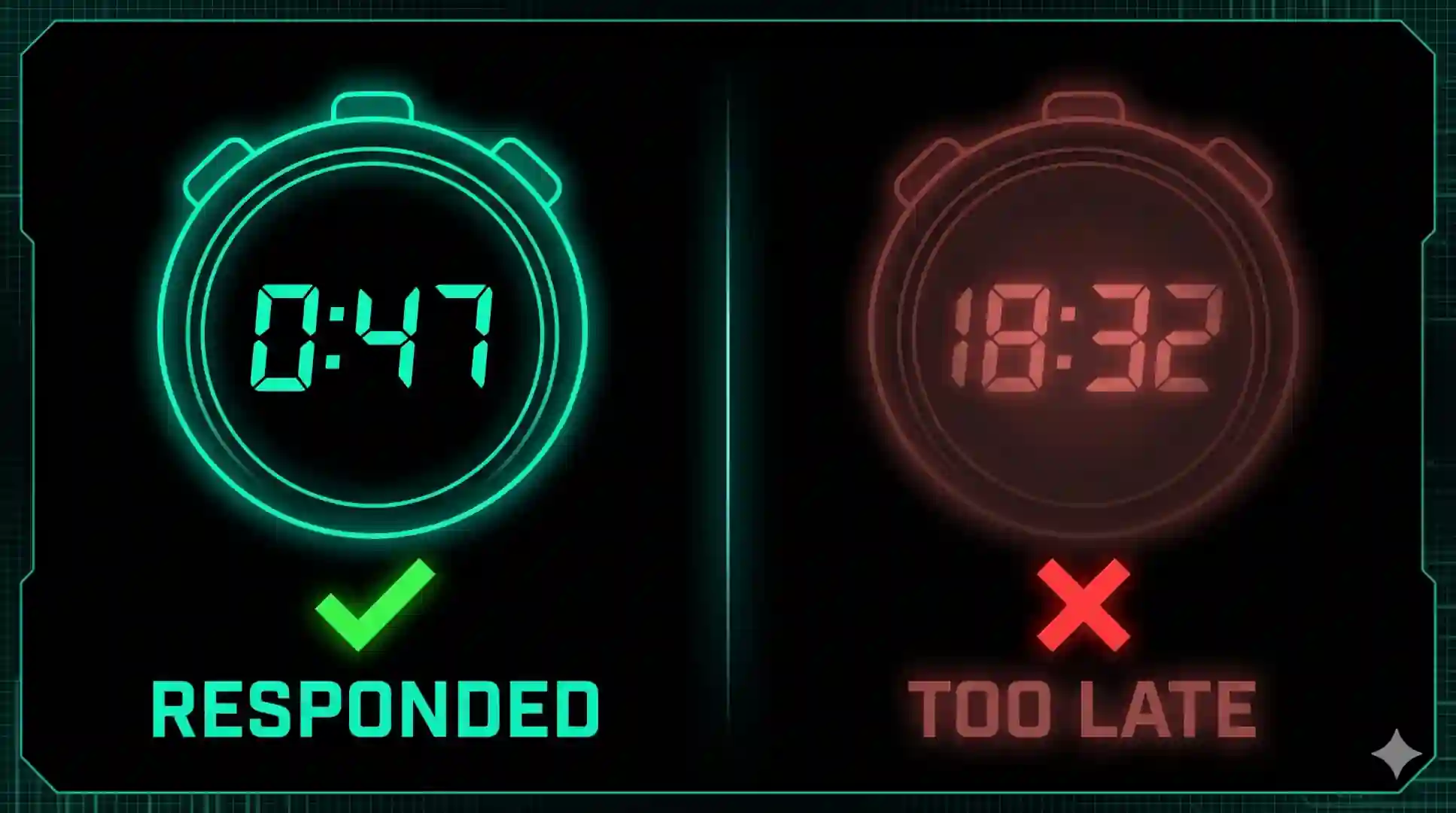
Lead response research — applicable across industries but validated specifically in legal intake studies — shows a 400% lift in qualification rates when responding to a lead within 5 minutes versus waiting 30 minutes or more.
For a law firm, “qualification” means the difference between a signed engagement letter and a missed call that goes to opposing counsel. The math scales linearly with case fee value:
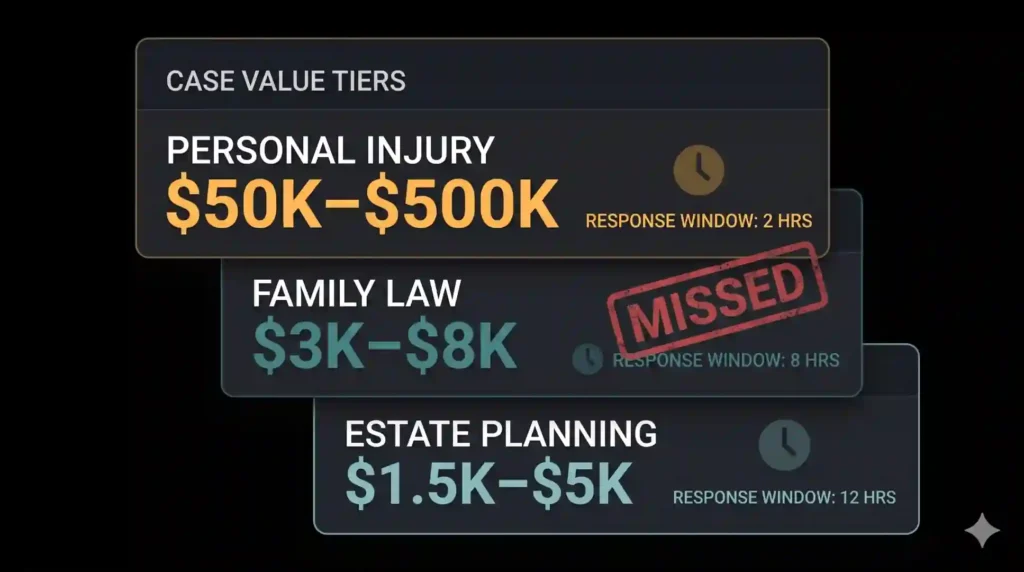
A family law retainer is $3,000–$8,000. A PI case fee is $12,500–$20,000 on average, with serious injury cases running $50,000–$500,000+. A workers comp case is $5,000–$15,000.
Missing one PI case per month to slow intake response costs $150,000–$240,000 per year in foregone fees. For a firm spending $20,000 per month on PPC, that’s not a rounding error — it’s the entire ROI calculation for your marketing budget.
## Why “they’ll leave a message” doesn’t work in legal
The assumption that prospects will leave a voicemail and wait for a callback is empirically wrong in every industry. In legal, it’s especially wrong for three reasons:
**Urgency.** Someone who was just arrested, just served divorce papers, or just got out of the ER is in crisis mode. They’re not methodically researching attorneys and leaving thoughtful voicemails. They’re calling the first three firms on Google and going with whoever answers.
**Competition.** In most metro markets, a PPC search for “personal injury attorney” returns 4–8 ads above the organic results. Your prospect isn’t calling one firm and waiting. They’re calling three firms simultaneously and signing with the first one that does a competent intake.
**Emotional state.** A person calling about a PI case, a criminal charge, or a custody dispute is anxious, sometimes scared, and looking for reassurance. Voicemail doesn’t provide reassurance. A calm, competent voice that says “let me take some information and get you in front of one of our attorneys” does.
## What the intake coordinator can’t cover (and what can)
The traditional solution is to hire more intake staff. For high-volume PI firms, this means an intake center — 3–5 coordinators on rotating shifts, $45,000–$70,000 each, plus management overhead. It works, until someone calls in sick on a Monday, quits with two weeks’ notice during your busiest campaign push, or simply burns out from the emotional weight of legal intake conversations.
Even a fully-staffed intake center can’t cover the 11 PM call. Or the Sunday morning call. Or the holiday weekend call from the car accident on the interstate.
An AI intake system built for legal workflows handles the coverage gap differently:
**Answers every call, every channel, 24/7.** Phone, web form, web chat, PPC click-to-call — all routed through one intake brain. No voicemail. No hold queue. No “press 1 for personal injury, press 2 for family law.”
**Runs the intake checklist.** Practice area identification. Incident date (statute-of-limitations capture). Opposing party details for conflict-of-interest pre-check. Basic fact pattern. Urgency assessment. Insurance information where applicable (UM/UIM for auto accident PI, workers comp carrier for injury claims).
**Conflict pre-check before booking.** The AI captures opposing parties and cross-references your conflict database before scheduling the consultation. Potential conflicts get flagged for attorney review. Clean intakes proceed to booking. This isn’t optional in legal — it’s ethically required, and most intake coordinators do it inconsistently under time pressure.
**Books the consultation.** Into the right attorney’s calendar, with the right time block, with pre-engagement documents (intake questionnaire, fee agreement, retainer template) sent to the prospect before the meeting. The consultation opens with strategy, not basic fact-gathering.
**Bar-compliant scripting.** The AI identifies itself as a non-attorney intake assistant. It never provides legal advice. It never creates attorney-client privilege. It follows the same disclaimers a competent intake coordinator would use, tuned to the specific Bar advertising rules in your jurisdiction.
## The math on a PI firm’s napkin
An AI intake system for a law firm costs $797–$2,985 per month depending on scope and volume.
At $1,485 per month (the ENGINE tier), your annual cost is $17,820.
Your average PI case fee is $20,000. **One captured case pays for the entire year of the system.** Not “one case per month.” One case per year.
If your firm misses one after-hours PI call per week (which, based on the 42% off-hours data, is almost certainly true for any firm spending on PPC), you’re looking at 4 missed potential cases per month. At even a 7% sign rate on those missed leads, that’s roughly one signed case every 3–4 months you’re leaving on the table.
The system pays for itself in the first quarter. Everything after that is margin.
## One thing to check this week
Ask your phone system or answering service for last month’s after-hours call log. Count the calls that arrived after 5:30 PM, before 8:30 AM, or on weekends. Then multiply by your average case fee value and a 7% sign rate.
That’s your annual intake gap in dollars. For most firms spending on PPC, it’s a six-figure number.
If you want us to run this analysis with your actual intake data, book a free 30-minute firm audit. We’ll map your intake coverage gaps, calculate what after-hours leakage is costing you, and tell you honestly if it’s a fit. No obligation.
—
*Neuzenix installs AI intake systems inside law firms that answer every call 24/7, run conflict pre-checks, capture statute-of-limitations data, and book consultations — with Bar-compliant scripting throughout.