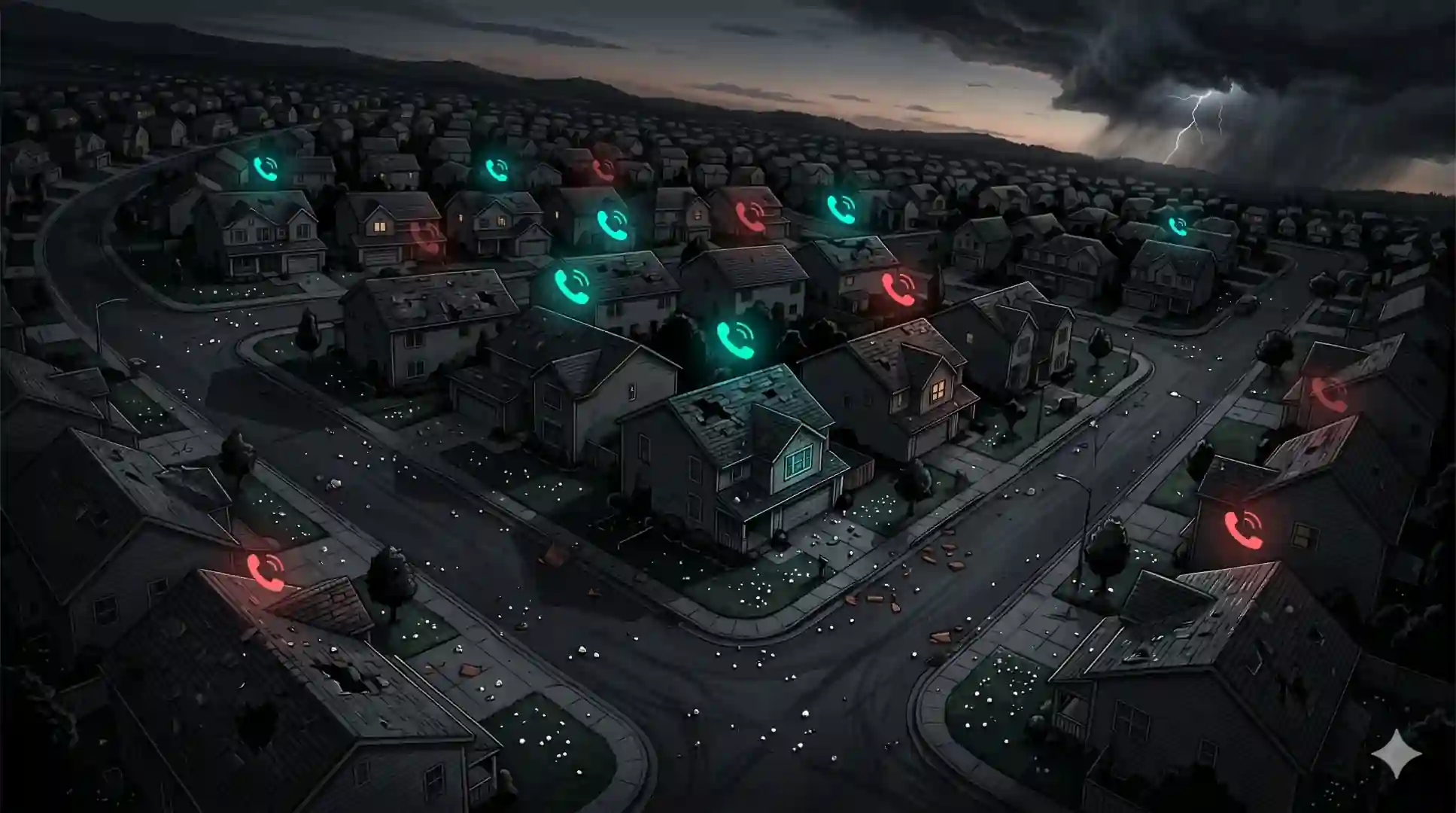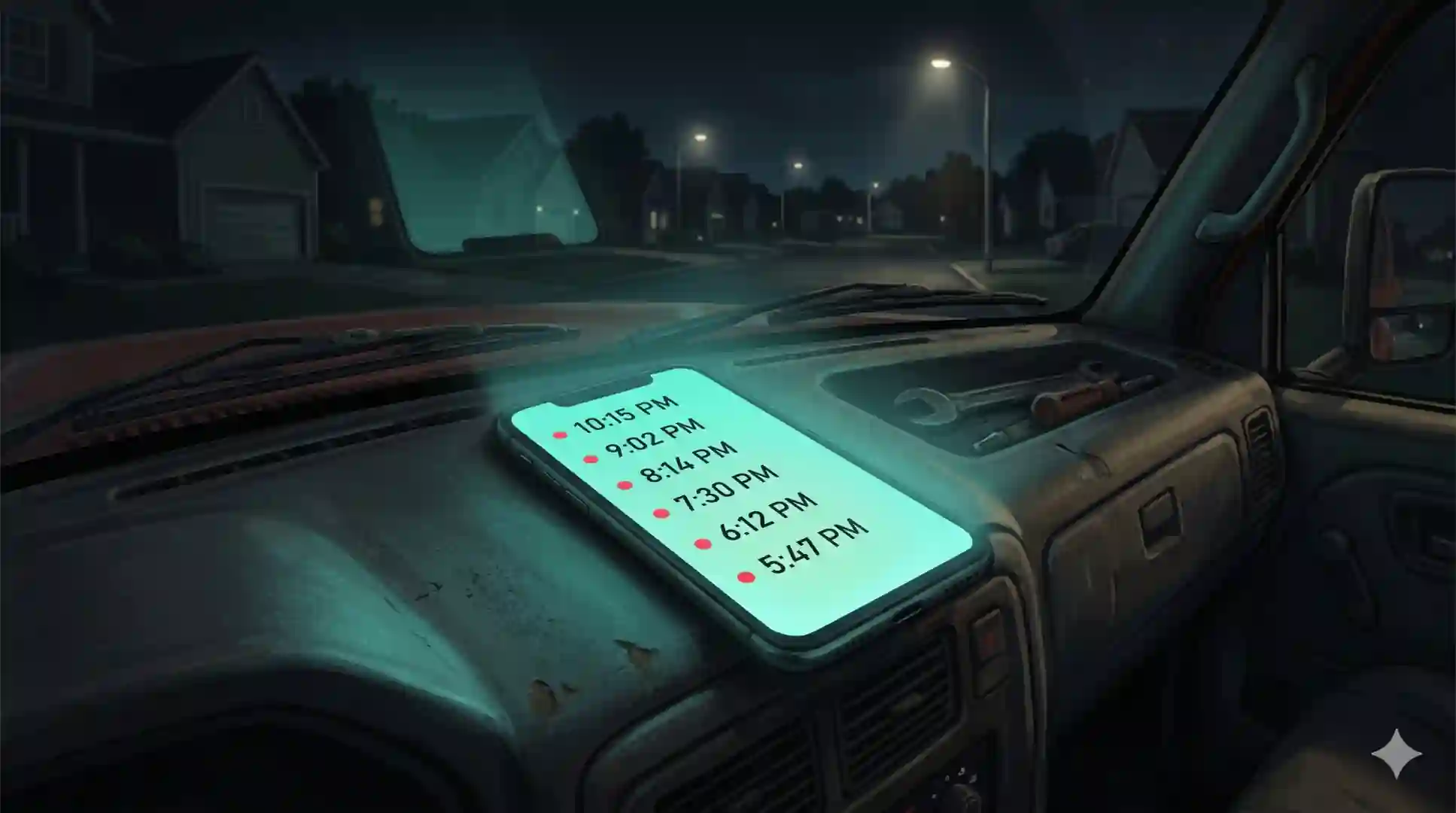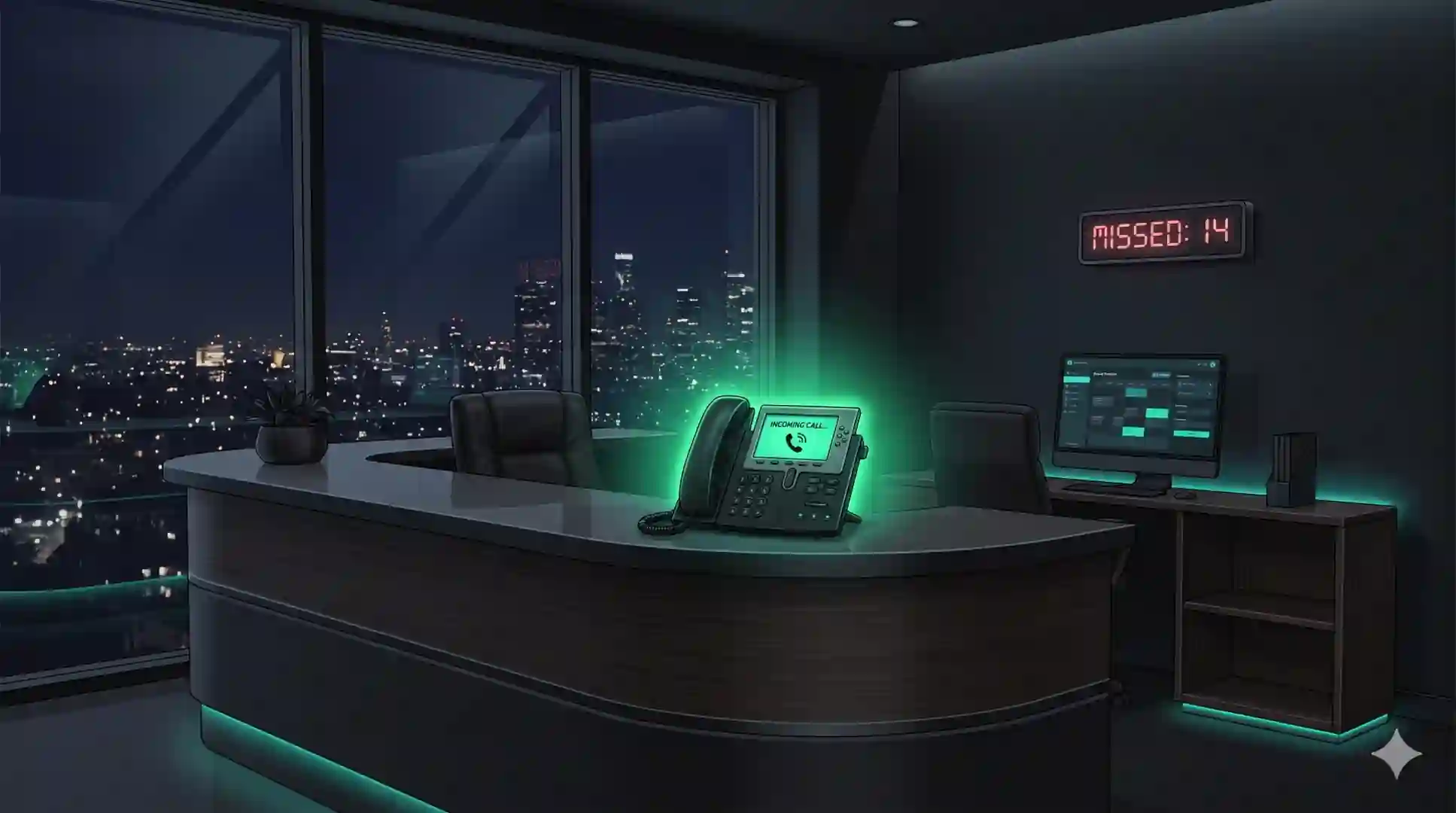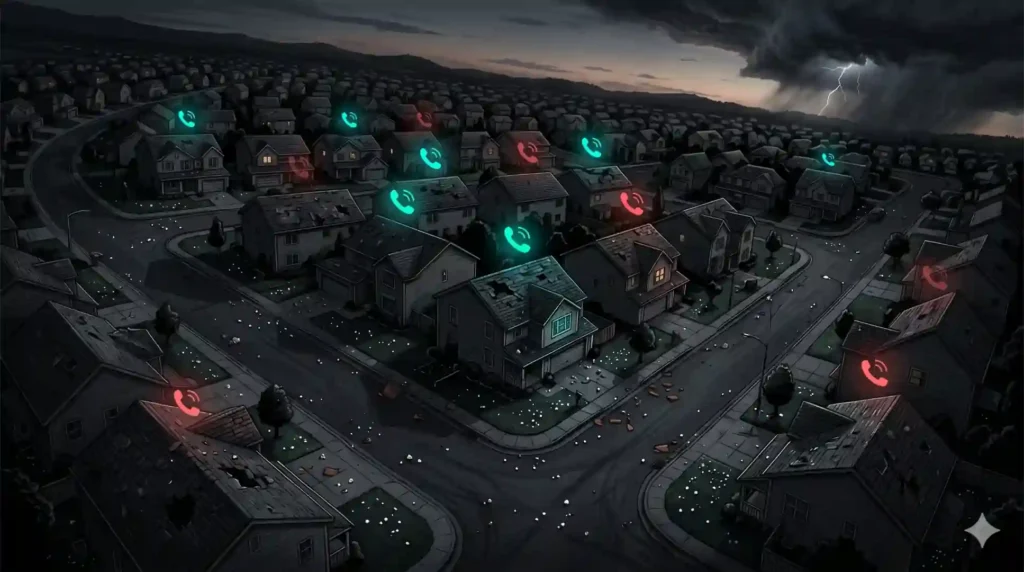
Hail hits Cedar Park at 3:47 PM on a Tuesday. By 4:15 PM, homeowners across three ZIP codes are on their roofs looking at dented shingles and cracked flashing. By 4:30 PM, your phone starts ringing.
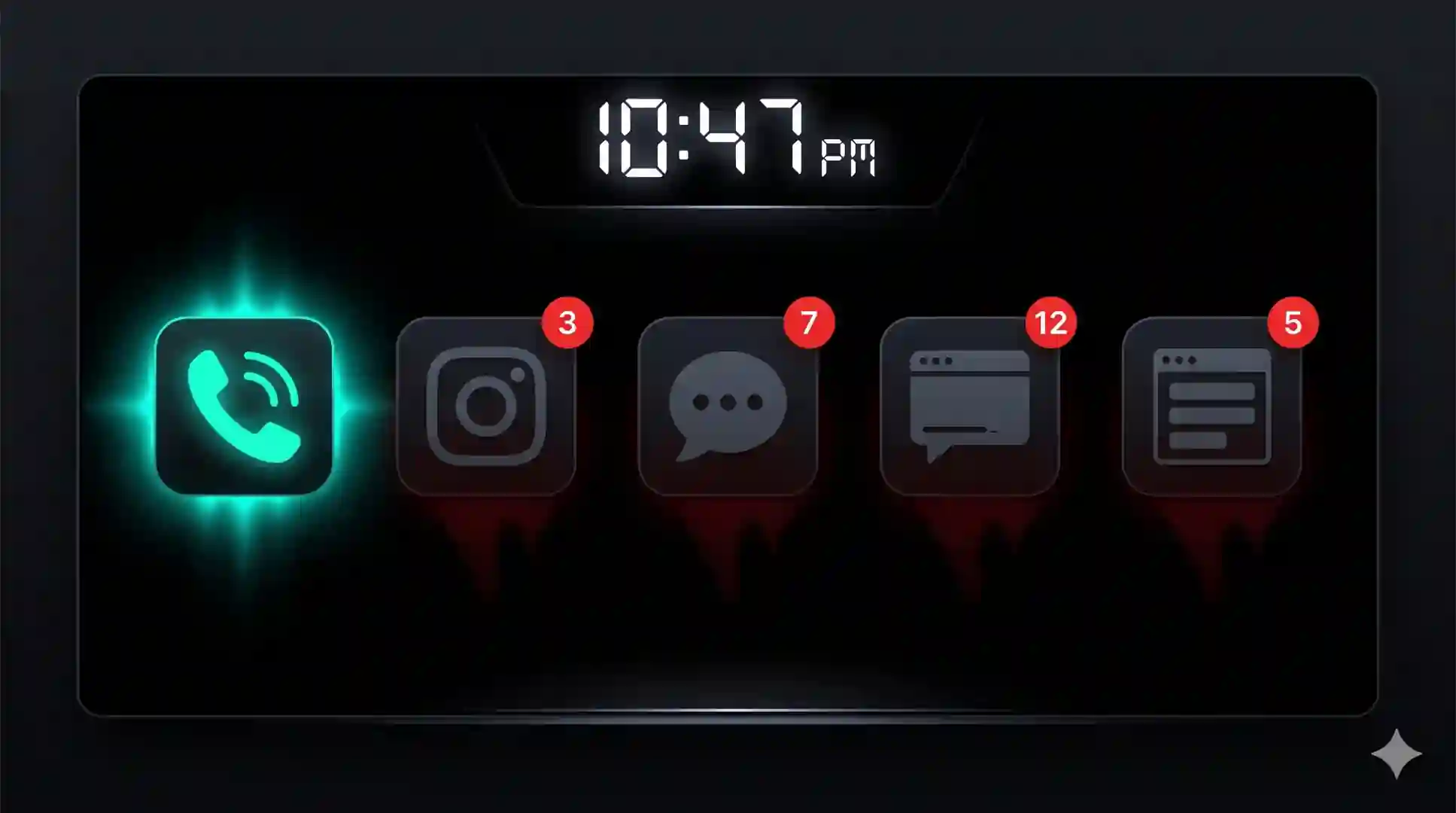
And it doesn’t stop. Not at 5 PM. Not at 7 PM. Not at 10 PM when the last homeowner finally gets off the roof and searches “roofing company near me.”
Your office coordinator left at 5:30. Your project managers are running estimates from the last storm. Your crew lead’s phone is going straight to voicemail because he’s on a tear-off.
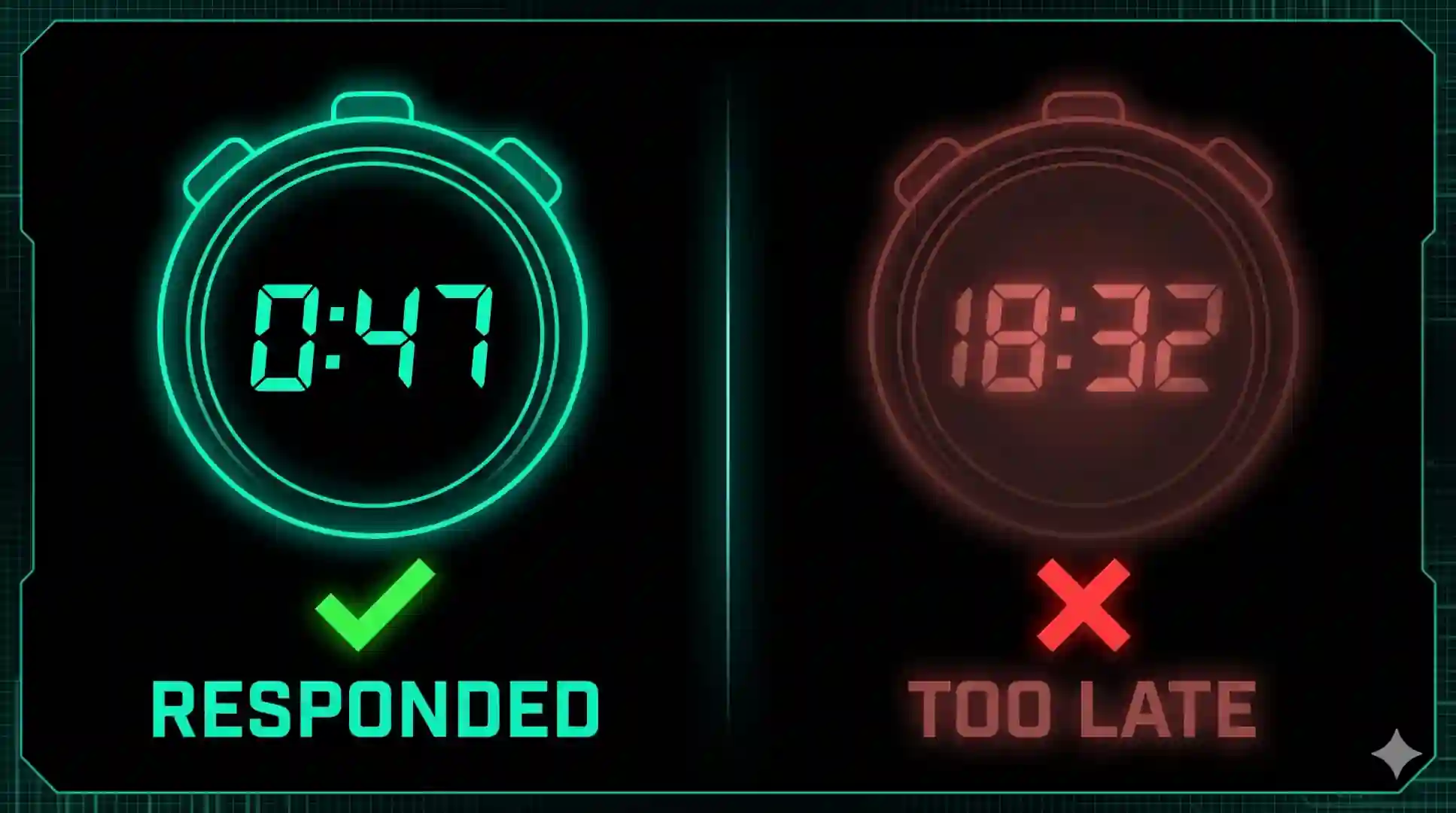
Between 4:30 PM and midnight, 87 calls came in. Your team answered 19 of them.
The other 68 called the next roofer on Google.
## What a storm-day call spike actually looks like
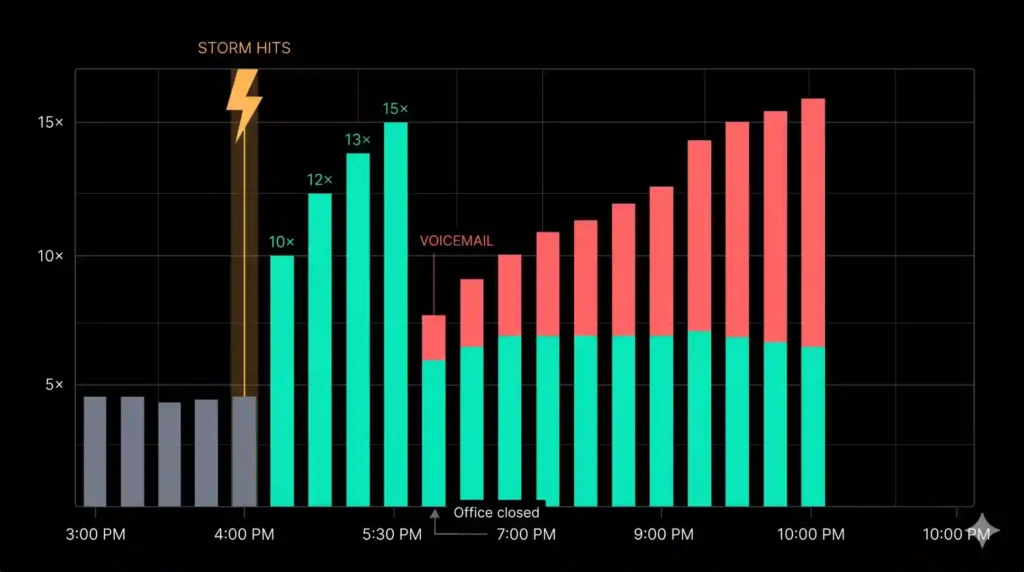
Normal call volume for a mid-size roofing company is 15–25 calls per day. After a significant weather event — hail, high wind, heavy rain, a tornado warning — that volume can spike 8 to 15 times in a 24-hour window.
That means 120 to 375 calls in a single day. Some of those are existing customers checking on scheduled work. Some are insurance adjusters. But the majority — 60 to 70% — are homeowners with fresh damage who need an inspection booked now.
Here’s what happens to those calls at a typical roofing company:
The first 30 minutes: the office answers most of them. The coordinator is on it, booking inspections, taking names and addresses, writing notes on sticky pads.
The next 2 hours: overflow starts. The coordinator is on a call when three more ring in. Two go to voicemail. One hangs up and calls the next company.
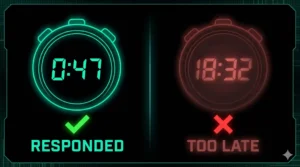
After hours: the office is closed. Voicemail picks up. For the homeowner who just got home from work at 6:30 PM and walked outside to see their gutters torn off, voicemail isn’t reassuring. They call someone who answers.
By the next morning, your team has a list of 19 booked inspections and a voicemail box full of messages they’ll spend 3 hours calling back — half of which have already booked with someone else.
## The math that storm-chasers understand and established roofers ignore
A residential roof replacement runs $8,000 to $40,000 depending on size, materials, and insurance coverage. The average in most metro markets sits around $18,000.
At a 30% close rate on inspections (the industry average for insurance-claim work), each booked inspection is worth roughly $5,400 in expected revenue.
Now apply that to the storm-day math:
**68 missed calls × 65% are damage inquiries = 44 potential inspections missed.**
**44 missed inspections × 30% close rate = roughly 13 jobs lost.**
**13 jobs × $18,000 average = $234,000 in revenue that called your number and went to your competitor.**
From one storm. One day.
Most roofing companies will have 4 to 8 significant weather events per year. Even capturing half the missed calls from a single storm covers the cost of an AI system for the entire year — several times over.
## Why “we’ll call them back tomorrow” doesn’t work in roofing
Roofing leads after a storm have the shortest shelf life of any home service. Here’s why:
**The first-roofer advantage is real.** When a homeowner has damage, they want someone on their roof within 48 hours. Not because the repair is always urgent — but because the anxiety is urgent. The first contractor who inspects the damage, explains the insurance process, and provides a scope of work will almost certainly get the job. By the time you call back the next morning, the homeowner has already shaken hands with the crew that showed up at 8 AM.
**Insurance creates urgency.** Homeowners know they need to file a claim quickly. They also know they need a contractor’s damage report for the adjuster. Every hour you don’t respond is an hour they’re worried their claim window is closing. The roofer who answers the phone and says “I can have someone out tomorrow morning” wins.
**Storm-chasers are faster than you.** This is the uncomfortable truth. The out-of-town crews that show up 48 hours after every storm event run call centers specifically designed to handle volume. They answer every call. They book every inspection. They close fast. Your established reputation, local relationships, and quality of work mean nothing if you don’t pick up the phone.
## The structural problem no amount of hiring solves
Hiring more office staff doesn’t fix storm-day call spikes for the same reason it doesn’t fix after-hours coverage: the math doesn’t work.
A full-time coordinator costs $35,000–$50,000 per year and can handle one call at a time. During a storm spike, when 15 calls come in during a 10-minute window, one person answers one. The other 14 hear a busy signal or voicemail.
To staff for peak volume, you’d need 8–10 coordinators on standby. That’s $350,000–$500,000 in annual payroll for a team that sits idle 340 days a year and works frantically for 25.
No roofing company operates that way. So the calls go to voicemail. And from voicemail, they go to the storm-chaser with the call center.
## What catches the storm
The system that works needs to do three things: answer unlimited simultaneous calls (not one at a time), answer 24/7 (not 8:30–5:30), and handle the actual intake conversation well enough to book the inspection.
An AI receptionist built for roofing and restoration does exactly this:
**Absorbs the spike.** When 15 calls hit in 10 minutes, all 15 get answered. Not 1, not 3 — all of them. Each caller gets the same quality intake: name, address, damage type, insurance carrier, urgency. The AI doesn’t get flustered, doesn’t put people on hold, doesn’t ask them to call back later.
**Books the inspection.** “I can schedule an inspector at your property tomorrow at 9 AM or 2 PM — which works better?” Straight into your calendar. Confirmation sent by SMS within 30 seconds. The homeowner hangs up feeling like a professional operation just took care of them — because one did.
**Captures insurance details early.** The AI asks for the insurance carrier, policy number if available, and whether a claim has been filed. This lets your estimator show up prepared, and it flags the leads that have the highest likelihood of closing (homeowner already initiated claim = highest intent).
**Handles after-hours and weekends.** The storm hits at 4 PM. Calls peak at 6–9 PM. Your office closed at 5:30. Without AI, you miss the entire peak window. With it, every call from 5:31 PM to 8:29 AM the next morning is answered, qualified, and booked.
**Follows up on estimates.** This is the second biggest leak in roofing — and the one that costs you money every day, not just on storm days. An estimate for a $22,000 roof sits in the homeowner’s inbox for 3 weeks because nobody followed up. The AI runs a nurture sequence: check-in at 48 hours, again at 7 days, again at 14 days. Estimate-to-contract conversion rates typically improve 25–40% with structured follow-up.
## The payback math on a roofing napkin
An AI system for a roofing company runs $1,485 per month at the ENGINE tier. Annual cost: $17,820.
Average roof replacement: $18,000.
**One captured job that would have gone to voicemail pays for the entire year of the system.** Not one per month. One per year.
If the system captures 3 extra inspections per storm event (conservative — most companies miss 40+ per storm), and you close 30%, that’s roughly 1 additional roof per storm. At 4–8 storms per year, the system returns $72,000–$144,000 on a $17,820 investment.
That’s 4–8× ROI before counting estimate follow-up recovery, after-hours capture, and review generation.
## What to check before the next storm hits
Pull your phone system’s call log from the last weather event. Count the calls that went to voicemail or rang out. Then multiply: missed calls × 65% (damage inquiries) × 30% (close rate) × your average roof price.
That’s what the storm cost you beyond the damage it caused to other people’s roofs.
If you want us to run this analysis with your actual call data, book a free 30-minute growth session. We’ll map your storm-surge coverage gaps and calculate what those missed calls cost — before the next front moves through.
Book Your Free AI Growth Session →
—
*Neuzenix installs AI systems inside roofing and restoration companies that absorb storm-day call spikes, book inspections 24/7, follow up on every estimate, and build the review reputation that beats the storm-chasers.